
Ask around and you will hear plenty of stories about deposits that never came back in full — cleaning fees deducted, repair costs taken for a scuff on a wall.
But if you know the BC Residential Tenancy Act (RTA), most unfair deductions are preventable. Tenants have several strong protections here, and some of them are not widely known.
⚠️ Current as of August 2026. I am not a lawyer — for an actual dispute, seek advice from the RTB or a tenant advocacy organization such as TRAC.
1. Deposit Limits — and There Are Two Kinds

- Security deposit: up to 50% of one month’s rent (RTA s.19)
- Pet damage deposit: a separate 50% of one month’s rent
On $2,000 rent, the security deposit caps at $1,000, with up to another $1,000 if you have a pet. Together they cannot exceed one month’s rent. Being asked for more than that is itself a breach.
2. The 2026 Deposit Interest Rate Is 0%
Landlords must return interest along with the deposit. For 2026, that rate is 0%.
The formula is unusual: interest rate = prime rate on January 1 minus 4.5%. Prime on January 1, 2026 was 4.45%, so 4.45 − 4.5 is negative and the rate is set to zero for the year.
So expect no interest on this year’s portion. However, if you lived there across several years, earlier years may have carried a positive rate. The RTB publishes an official deposit interest calculator — enter your tenancy dates to check.
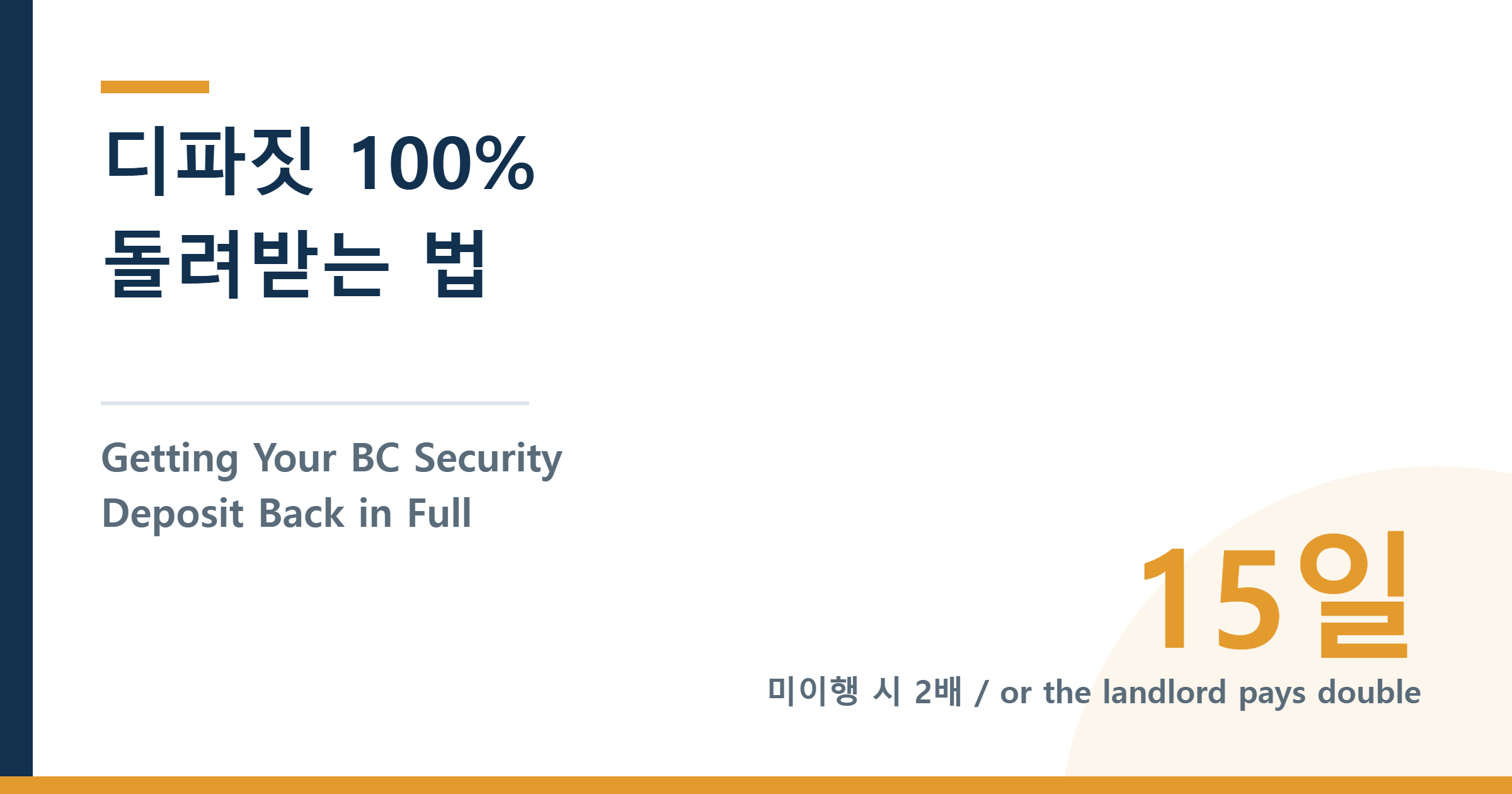
3. The Core Rule — 15 Days, or Double
This is the most important section in this article.

The 15 days runs from the later of:
- the end of the tenancy, or
- the day the landlord receives your forwarding address in writing
Within that window the landlord must do one of three things:
- Return the full deposit plus interest
- Obtain your written consent to deductions and return the balance
- Apply to the RTB for dispute resolution
If they do none of these, you are entitled to double the deposit (RTA s.38). This is not discretionary, and arbitrators order it regularly.
Two Things People Miss
First, the forwarding address must be in writing. A verbal mention or a casual text may not start the clock. Serve it using an accepted method and record the date and how you sent it. If you emailed it, keep the email.
Second, written consent only covers what you actually agreed to. Signing a move-out inspection report is not blanket consent to every deduction. If you disagree, do not sign, or write that you do not agree before signing.
4. Skipped Inspections Extinguish the Landlord’s Claim
This is the strongest tenant protection in the Act, and the least known.

BC requires a Condition Inspection Report at both move-in and move-out. The landlord must offer the inspection opportunity, complete the report, and give you a copy.
If the landlord fails to follow this process, their right to claim against the deposit is extinguished.
That means even where real damage exists, they cannot deduct for it if the procedure was not followed. If you never did a move-in inspection or never received a copy, that fact alone is a powerful defence.
The same works in reverse — a tenant who fails to attend without good reason can lose ground, so always attend the inspection.
5. What Can and Cannot Be Charged
Landlords may claim for tenant-caused damage but not for normal wear and tear.
| Not chargeable (wear and tear) | Chargeable (damage) |
|---|---|
| Fading and discolouration over time | Holes larger than a fist |
| Furniture marks, light scuffs | Writing on walls, unauthorized repainting |
| Nail holes from hanging pictures | Numerous anchor holes |
| Normal carpet compression | Pet staining and scratching |
| General aging of the paint film | Nicotine staining from smoking |
And even legitimate damage is not charged at full cost. Only the remaining useful life is claimable — interior paint is 6 years, carpet is 12. Three-year-old paint means roughly half. The prorating math is covered in the paint damage guide.
6. Notice Periods
Getting the notice wrong costs you rent before you even reach the deposit question.
Month-to-month
- At least one full month’s written notice
- It must arrive before the day rent is due to end the tenancy at the end of the following month
- To end August 31, give notice on or before July 31
Fixed term
- Still one month’s written notice to end on the expiry date
- Early termination is generally not permitted; penalties follow the agreement
Verbal notice does not count. Put it in writing, date it, and keep proof of delivery.
7. What to Do at Move-In — This Is Where It Is Won
Deposit disputes are usually decided at move-in, not move-out.
- Complete the Condition Inspection Report and get your copy
- Record every scratch, stain, and defect. The “too minor to mention” ones get billed later
- Take dated photos and video of every room on day one
- Ask when the unit was last painted and write it down — it drives the prorating calculation
- Confirm the report matches your photos
8. Move-Out Cleaning Checklist
The standard is “reasonably clean,” not showroom condition.
- Vacuum and wash floors
- Kitchen: oven interior, range hood filter, fridge inside and behind
- Bathroom: mildew, drains, toilet and sink
- Walls: remove hand marks (a melamine sponge works well)
- Fill nail holes and touch up in the matching sheen
- Windows and blinds
- Replace burnt-out bulbs and smoke detector batteries
- Remove all belongings and garbage
9. If the Deposit Does Not Come Back
- Demand return in writing, stating when the 15-day period began
- Request an itemized breakdown with quotes and receipts
- Check for wear-and-tear items and whether prorating was applied
- Check whether the inspection process was followed — if not, argue the claim is extinguished
- If unresolved, apply to the RTB for dispute resolution
- If they blew the 15 days, claim double
There are filing deadlines, so do not delay. Your evidence is photos, the inspection report, and written correspondence.
Frequently Asked Questions
Q. Can I use the deposit as last month’s rent? No. A deposit is not rent. Withholding rent against it counts as non-payment and can trigger an eviction notice.
Q. Do I have to hire professional cleaners? Even where the agreement says so, the RTB standard for tenants is “reasonably clean.” If you cleaned it properly yourself, you are generally not obligated to hire a company.
Q. Is signing the move-out report bad for me? Signing is not automatic agreement to every deduction, but note your disagreement in writing before you sign. Signing without comment makes disputes harder.
Q. Is the pet damage deposit returned separately? It follows the same 15-day rule. With no pet-related damage, it is fully returnable.
Q. My landlord will not respond. The clock starts when you send the written forwarding address by a method that leaves a record — silence on their end does not stop it. Proof of delivery matters at the RTB.
Q. I share the lease with roommates and only I am leaving. It depends on the tenancy structure. If the agreement continues, the deposit is normally settled when the whole tenancy ends. Agree the split with your roommates in writing in advance.
Summary — Three Things That Decide It
One: document everything at move-in. The inspection report copy, dated photos of every room, and the date of the last repaint. Ten minutes then beats an argument later.
Two: send your forwarding address in writing and record the date. It is the only thing that starts the 15-day clock, and it is the basis for a doubling claim.
Three: know wear and tear and prorating. Damage is not billed at full cost, and items past their useful life generally cannot be claimed at all.
And one more: if the landlord skipped the inspection process, their claim against your deposit is extinguished. If you never got a move-in report, remember that.
📌 Source: BC Residential Tenancy Act ss. 19 (deposit limits), 23 & 35 (condition inspections), 38 (15-day rule and doubling); RTB Policy Guideline 40 (useful life)
Related Reading
- Paint Damage in a BC Rental — What Landlords Can and Cannot Charge For (RTB Guide)
- BC Rental Wall Repairs Before Move-Out — Nail Holes, Scratches, Stains: Complete DIY Guide
- Paint Finish Types in Canada — Flat, Eggshell, Satin: A Complete Guide for Rentals and Touch-Ups
- Bank of Canada Holds at 2.25% Again — What It Means for Your Mortgage Renewal, HISA, GIC, and Rent
- Vancouver rents fell for 25 months. Why is yours going up?